
Sunken Concrete Slab Repair in Miramar, FL
High-density polyurethane foam lifting and void filling for sunken driveways, patios, and slabs in Miramar, FL. Same-day restoration and immediate traffic access. Engineered site preparation, laser-calibrated drainage slopes, and 4,000+ PSI commercial mixes designed for South Florida weather extremes.
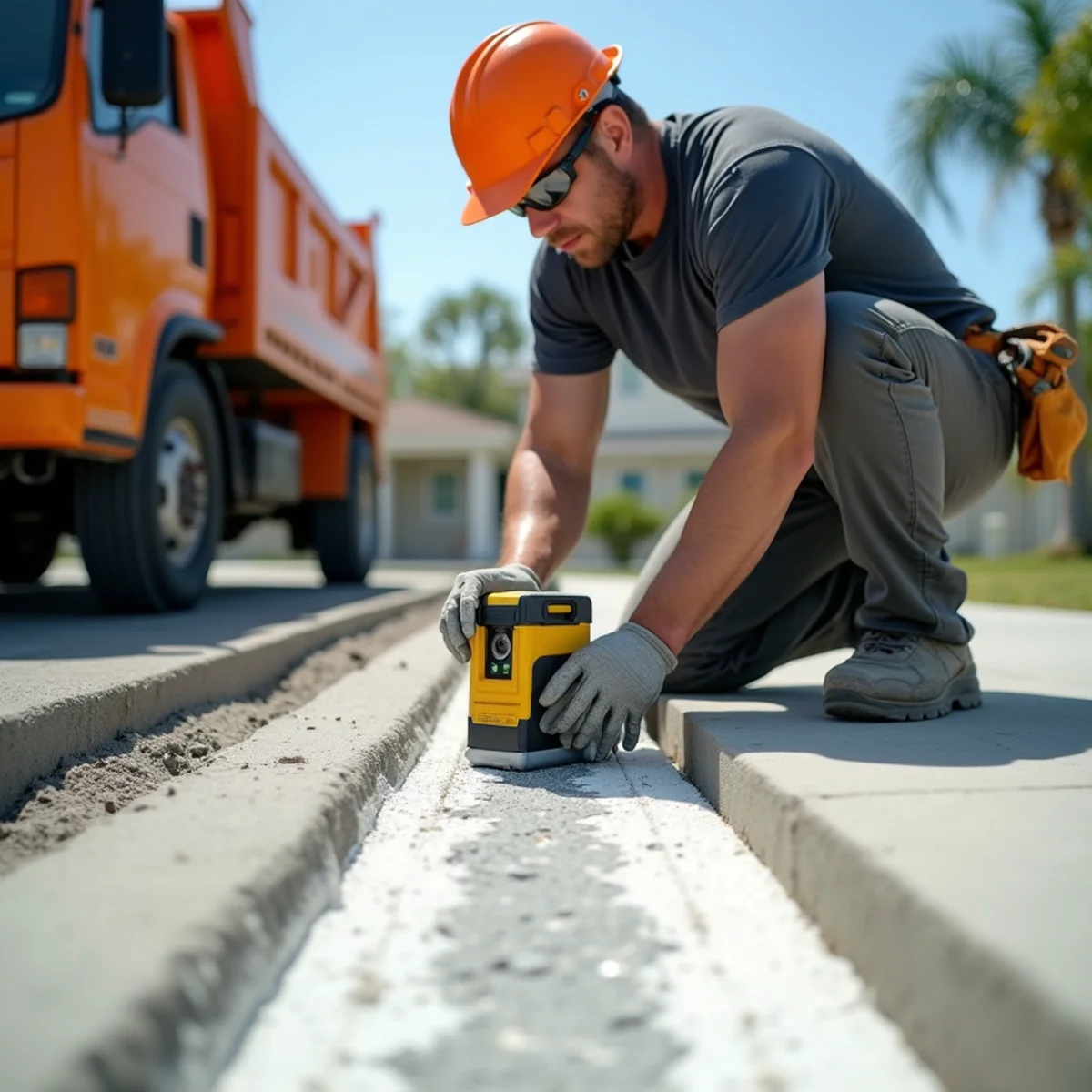
What Our Sunken Concrete Slab Repair Service Includes in Miramar
Settled, sunken concrete slabs represent one of the most frustrating and hazardous structural challenges confronting property owners in Miramar, Pembroke Pines, Weston, Southwest Ranches, and across Western Broward County. When driveways, pool decks, patios, or interior foundations sink, they reverse designed drainage slopes, channeling torrential tropical stormwater directly toward garage doors, exterior CBS block walls, and living spaces. The resulting standing water creates serious slip-and-fall trip hazards, damages vehicle undercarriages, and compromises building integrity. At {BRAND}, our specialized geotechnical polyurethane concrete lifting (polyjacking) technology restores settled slabs to their precise original grade quickly, cleanly, and at a fraction of the cost of total replacement.
Understanding why concrete slabs sink in Western Broward requires examining South Florida's unique subterranean geology. Subdivisions developed throughout Miramar, SilverLakes, Sunset Lakes, and surrounding communities were constructed over historic Everglades wetlands and marsh floodplains. Beneath the surface, native soils consist of variable layers of fine silica sand mixed with deep pockets of organic muck and decomposed peat. Over decades, subterranean organic material naturally de-waters and biodegrades, leaving open cavities beneath heavy concrete flatwork. Furthermore, South Florida's subtropical climate dumps over 60 inches of rainfall annually; during intense tropical downpours, stormwater rushing through unsealed control joints washes away sandy subgrade material, creating expansive subterranean voids that deprive slabs of bearing support.
Traditional repair methods such as cementitious mudjacking or complete concrete demolition frequently fail or worsen the problem in South Florida's fragile soils. Mudjacking pumps a heavy slurry of crushed limestone, clay, and water through large, unsightly two-inch holes. This heavy grout adds over 100 to 120 pounds per cubic foot of burden onto already weak subsoil, frequently triggering secondary settlement within months. By contrast, {BRAND} utilizes high-density closed-cell expanding polyurethane polymers. Weighing just 3 to 4 pounds per cubic foot, our engineered geotechnical foam expands with over 100 PSI of controlled hydraulic lifting force, consolidating loose sand particles and filling deep void cavities without adding destructive dead-weight to fragile Everglades soils.
Our non-invasive installation process preserves your property while delivering pinpoint elevation accuracy. Rather than core-drilling massive openings, our technicians drill discrete 5/8-inch micro-injection ports—smaller than a penny—at engineered intervals across the settled slab. Using specialized plural-component proportioners, we inject the liquid polymer beneath the concrete. Within seconds, the chemical reaction causes the foam to expand into a rigid, closed-cell cellular matrix. Our technicians monitor continuous laser elevation sensors, calibrating the lift to within 1/16 of an inch to re-establish positive drainage away from structures. Once elevation is achieved, we patch every micro-port with color-matched polymer concrete mortar, leaving virtually no trace of the repair.
Speed, longevity, and environmental safety make polyurethane foam lifting the premier choice for South Florida residential and commercial properties. Unlike ready-mix concrete pours that demand city permits, noisy jackhammers, torn-up landscaping, and a seven-day curing period, our polyjacking process is completed in just two to four hours. The hydrophobic closed-cell foam is completely impervious to water, will never wash away during hurricane flash floods, and does not leach harmful chemicals into Florida aquifers. Because the polymer cures to full compressive strength in just fifteen minutes, you can resume normal parking and foot traffic immediately. Contact {BRAND} at (833) 334-0468 today to schedule your on-site sunken concrete evaluation.
Key Components of Every Sunken Concrete Slab Repair Pour:
- Full-depth subgrade excavation and organic soil removal
- Compacted Florida crushed limerock base (95% Proctor)
- Grade 60 #4 steel rebar matrices elevated on chairs
- Commercial-grade 4,000+ PSI ready-mix formulations
- Laser-calibrated drainage slopes (1/8" to 1/4" fall per foot)
- Precision tooled contraction joints to eliminate cracks
Signs Your Flatwork Demands Professional Attention
Our Drainage-First Installation & Repair Process
Laser Elevation Survey & Void Diagnostic Audit
Our geotechnical technicians survey your settled slab using precision laser levels, map subsurface void boundaries, and calculate the exact polymer volume needed to achieve level.
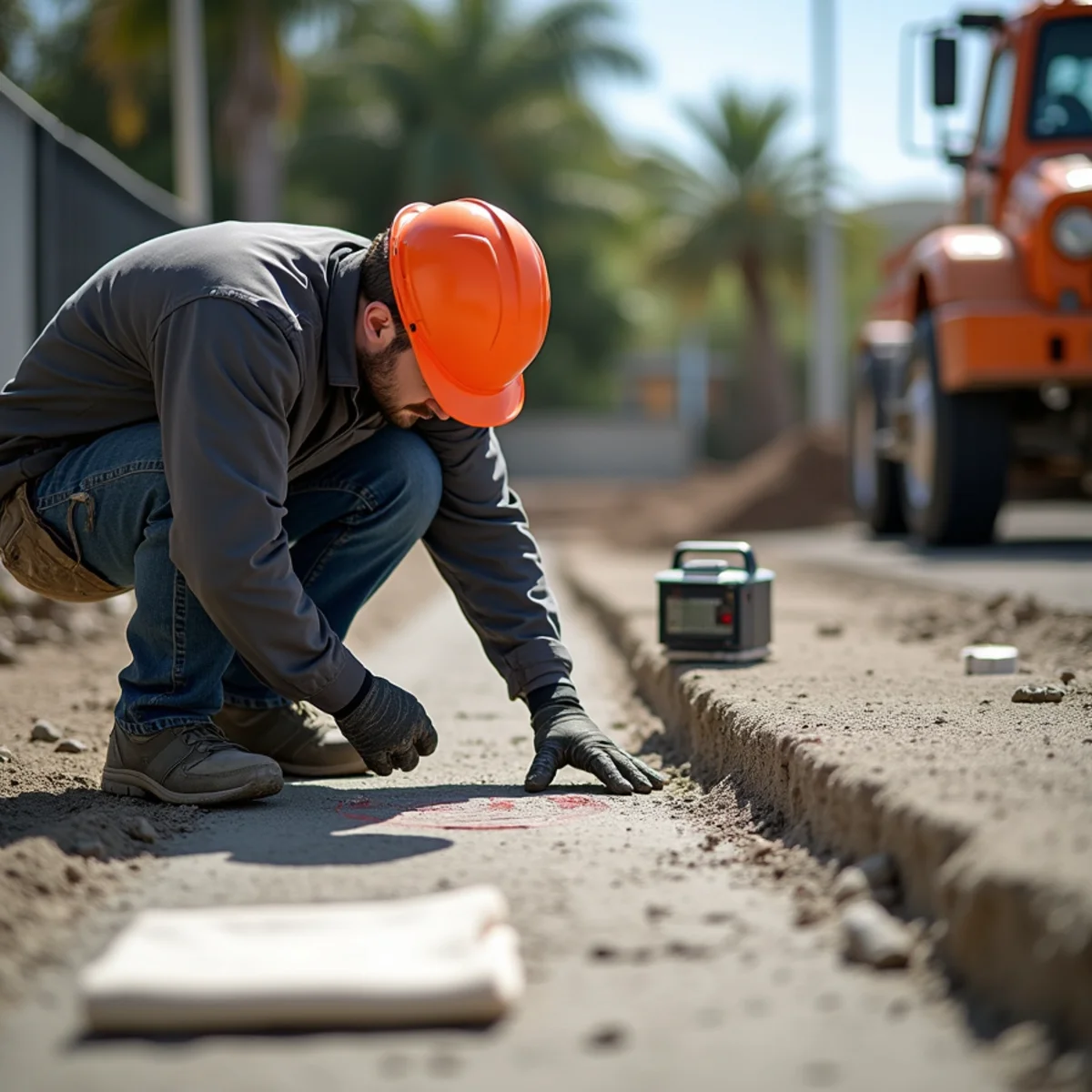
Micro-Port Drilling (Penny-Sized 5/8-Inch Holes)
We drill discrete 5/8-inch injection ports through the concrete slab at strategic grid intervals, avoiding heavy core holes that compromise structural slab integrity.
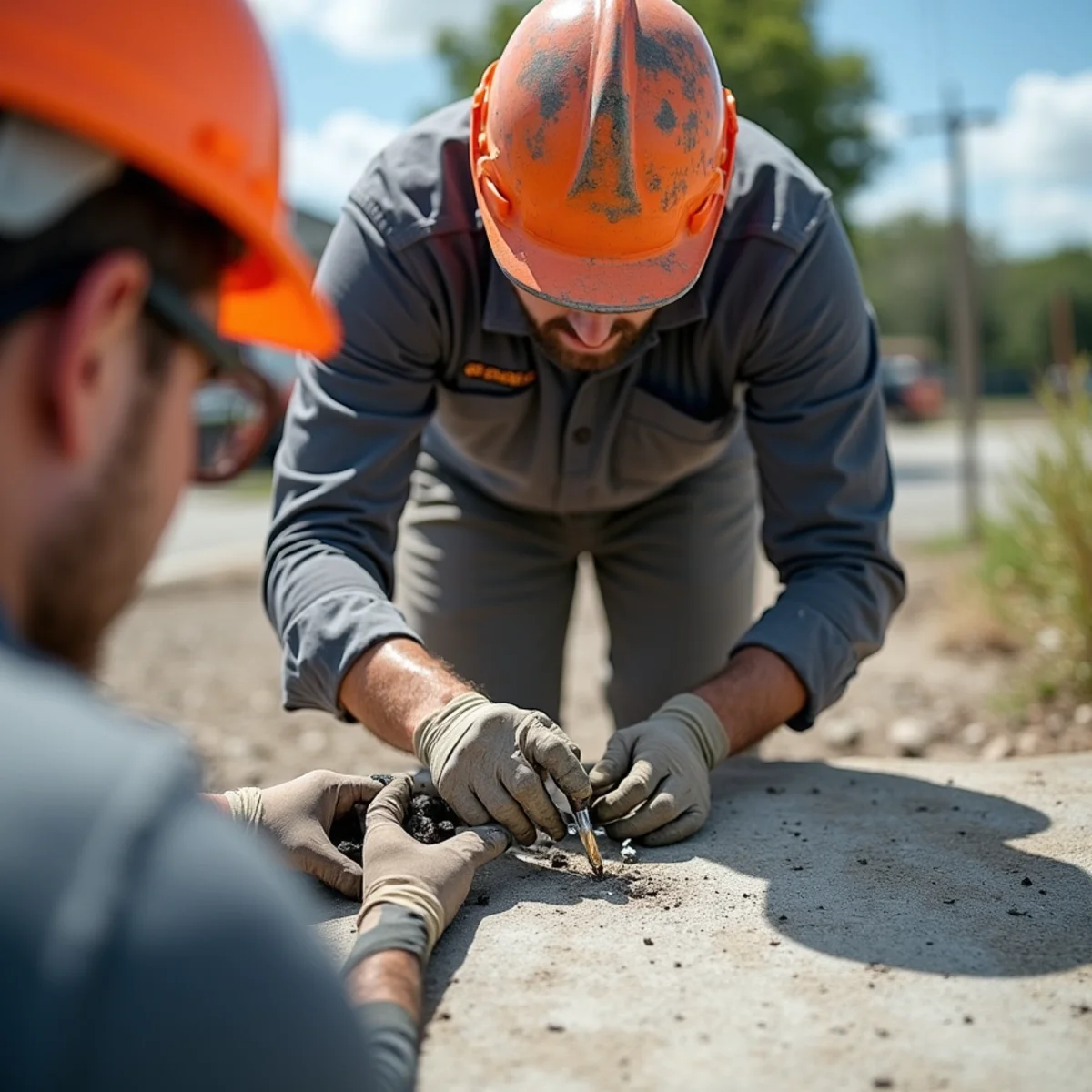
High-Density Polyurethane Polymer Injection
Using specialized heated proportioners, we inject two-part closed-cell polyurethane foam beneath the slab, which expands aggressively to consolidate weak subsoil and fill voids.
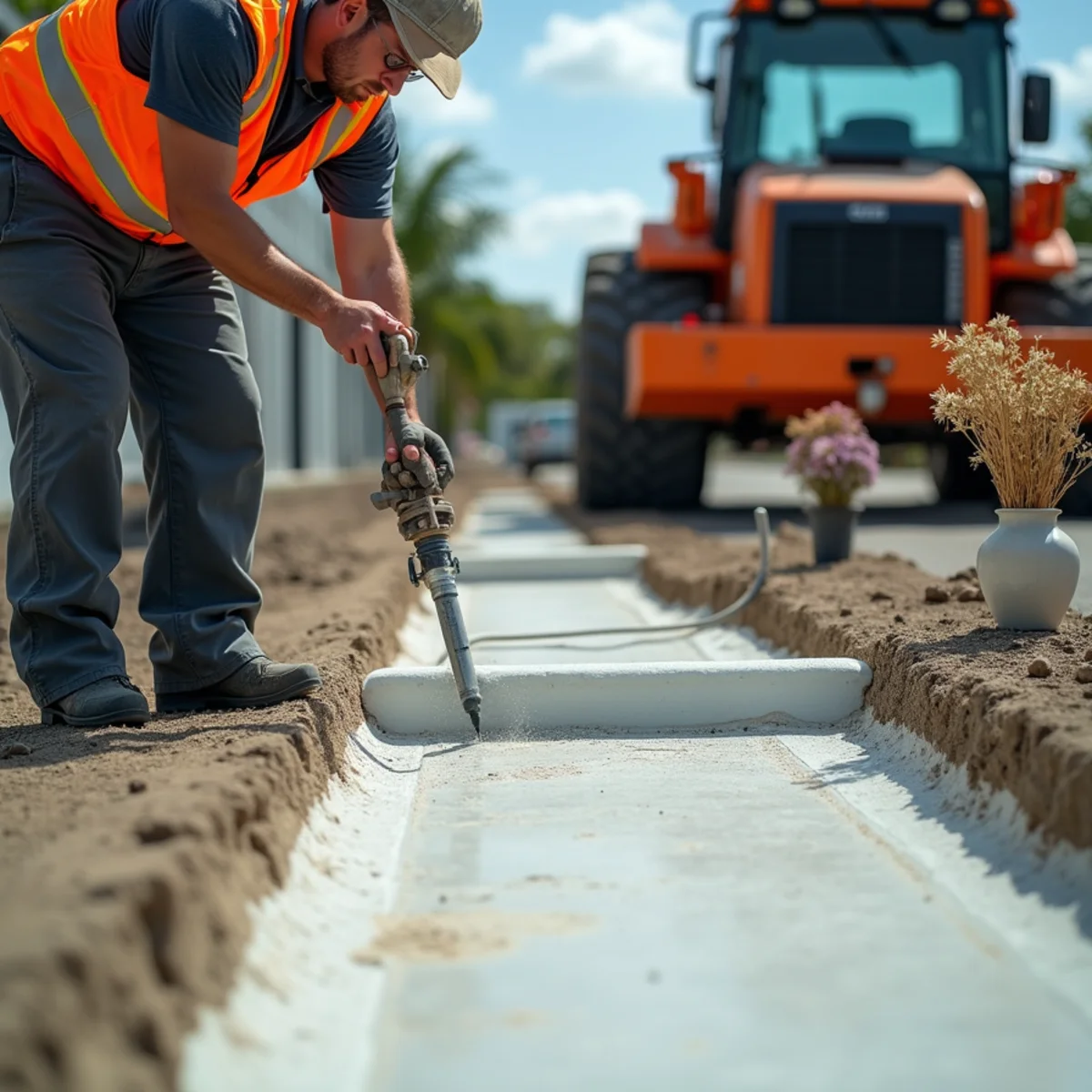
Real-Time Laser Leveling & Slope Calibration
As the structural foam expands with over 100 PSI of hydraulic lifting force, our crews monitor laser elevation receivers, gently elevating the slab to exact original grade.
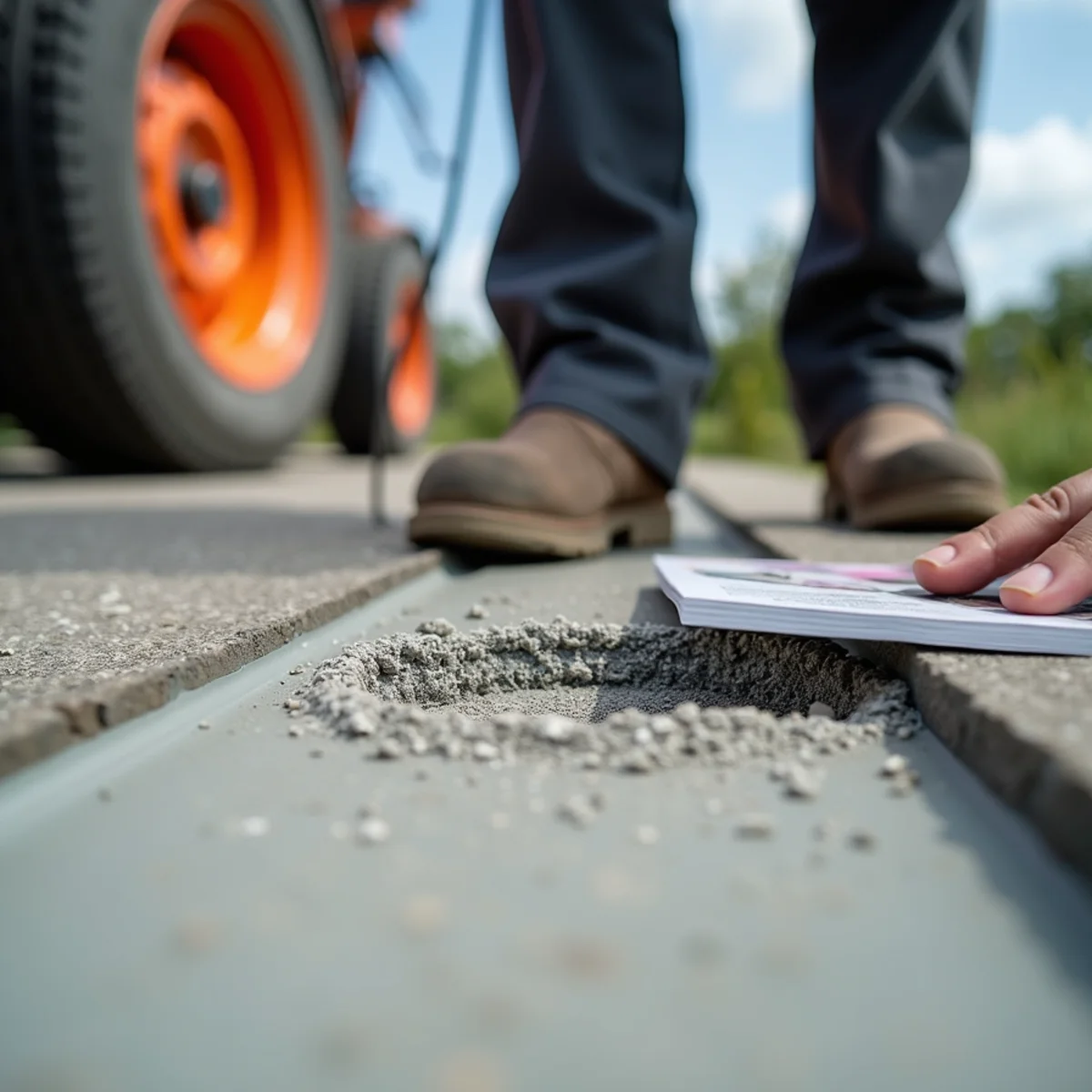
Port Capping with Color-Matched Polymer Mortar
We remove injection ports, clean the holes, and patch each 5/8-inch opening flush with commercial-grade, color-matched non-shrink cementitious mortar.
Water Drainage Verification & Immediate Handoff
We perform a water runoff test to confirm positive drainage away from structures. Because the foam cures fully in 15 minutes, your driveway is ready for traffic immediately.
Pricing Factors & Estimating Benchmarks in Miramar
In South Florida, concrete flatwork typically ranges from $5 to $17 per square foot for basic to custom finishes, with typical residential projects averaging $4,500 to $12,000 depending on scope. Final investment reflects site variables rather than generic flat rates:
- Total volume of closed-cell high-density polyurethane polymer foam required
- Square footage of settled slab area and average depth of subterranean void pockets
- Elevation lift height needed to restore positive drainage (1/2 inch to 3+ inches)
- Interior residential living space access vs exterior driveway and pool deck access
- Subsurface soil stabilization needs and tree root barrier installations
- Control joint caulking and perimeter foam containment preparation
Comparison of Construction Approaches & Durability
| Method / Material | Primary Cost Driver | Maintenance Need | South Florida Suitability |
|---|---|---|---|
| High-Density Polyurethane Lifting (Polyjacking) | Poundage of structural polymer, 5/8-inch port drilling, laser leveling | Virtually zero; polyurethane never decomposes or washes away | Premier fix; lightweight (3 lbs/cu ft) adds zero weight to fragile Everglades muck |
| Traditional Cementitious Mudjacking | Grout pump mobilization, heavy limestone slurry, 2-inch holes | Slurry often erodes or sinks deeper under its own heavy weight | Poor choice in South Florida; adds 100+ lbs/cu ft of burden to weak soils |
| Sectional Demolition & Slab Replacement | Jackhammering, debris haul-away, limerock base, complete ready-mix pour | Wash and seal every 3 years; new heavy slab may settle again | Required only when concrete is pulverized into multiple jagged fragments |
| Self-Leveling Cementitious Skim Topping | Bagged polymer underlayment, primer, trowel labor | Shatters and flakes within 6 months under vehicular traffic | Unsafe; leaves massive hollow voids beneath the slab unaddressed |
| Steel Push Piers & Bracket Underpinning | Hydraulic pier driving, deep bedrock anchor brackets, engineering | Periodic structural engineering inspection | Necessary only for major multi-story structural foundation wall failures |
| Do-Nothing / Drainage Sandbags | Temporary sandbags, repeating flood cleanup costs | Endless water intrusion and ongoing foundation undermining | Dangerous; leads to catastrophic garage and living area water damage |
Property Owner Pre-Pour Readiness Checklist
- Remove all vehicles, tools, and stored items from the settled concrete area.
- Locate private subterranean sprinkler pipes, low-voltage wiring, and gas lines.
- Inspect adjacent downspouts and gutter discharge points for soil washout.
- Ensure clear exterior access path for our mobile polyurethane rig within 150 feet.
- Keep family members and pets indoors during high-pressure injection operations.
- Note any historical plumbing repairs or water leaks that occurred beneath the slab.
- Document initial water pooling patterns during rainfall to assist our technicians.
Need an Estimate for Sunken Concrete Slab Repair?
Our Miramar technicians inspect your property, evaluate laser elevations, and supply written itemized quotes.
(833) 334-0468Mon–Sat 7AM–6PM · Sunday EmergencyRelated Concrete Services
Service Areas for This Work
- Broward County, FLOne of only two Florida counties in the High-Velocity Hurricane Zone. Its 2...
- Pembroke Pines, FLDirectly north of Miramar. Century Village's 55+ condo walkways need trip-h...
- Hollywood, FLFounded in 1925 by Joseph Young. Hollywood Lakes and North Lake canal homes...
- West Park, FLBorders east Miramar along SR 7. Carver Ranches and Lake Forest ranch homes...
- Pembroke Park, FLA small town packed with warehouses off Hallandale Beach Blvd and SW 30th A...
- Miami Gardens, FLDirectly south of Miramar across County Line Rd. 1960s Carol City and Norla...
- Country Club, FLAn unincorporated CDP on the Broward line south of Miramar, so permits go t...
- Miami Lakes, FLThe Graham family's 1962 planned town with curving freshwater lakes. Lake-b...
Get a Written Quote on Sunken Concrete Slab Repair
Precision laser grading, Grade 60 steel rebar, and Florida HVHZ compliance on every pour.
Serving Miramar, Pembroke Pines, Hollywood, and all communities across Broward & Miami-Dade counties.
Frequently Asked Questions About Sunken Concrete Slab Repair
Specific answers regarding permits, timelines, concrete specifications, and warranties for sunken concrete slab repair.
In Miramar, Pembroke Pines, and Weston, much of the terrain was built over reclaimed Everglades wetlands. Slabs sink when subterranean organic muck decomposes, or when intense subtropical rainstorms wash away loose silica sand subbases, leaving hollow voids beneath the concrete.